
Wedding Photo Booth Backdrop Ideas: Floral Walls, Neon Signs, and 360 Video Moments
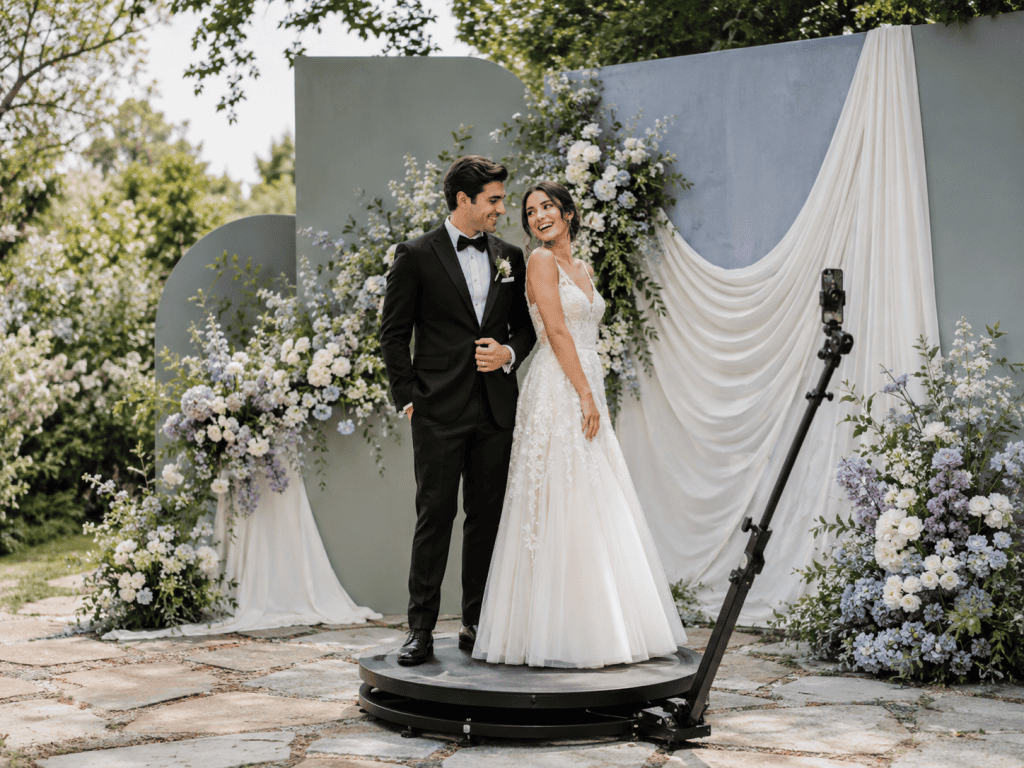
A wedding photo booth backdrop has to do more than fill an empty corner. It needs to look good in guest photos, fit the style of the reception, and hold up during a busy event. A floral wall may look beautiful during setup, but if the lighting is weak or the booth is placed in a tight walkway, guests will use it once and move on.
The best photo booth areas are planned like a small event zone. The backdrop, signage, lighting, booth placement, and guest flow all work together. Floral walls, greenery panels, neon signs, balloon garlands, and 360 video booths can all be part of the setup, but the design needs a clear purpose.
Here are practical wedding photo booth backdrop ideas for couples, planners, decorators, and event vendors who want the space to feel polished and easy to use.
Start with One Strong Backdrop
The main backdrop should lead the design. Trying to mix too many large visual pieces in one space usually makes the photo area feel crowded.
A floral wall is a strong fit for classic weddings, garden-inspired receptions, bridal showers, and romantic ballrooms. White florals, blush tones, and soft greenery photograph well because they frame guests without pulling too much attention away from the couple or the outfits.
A greenery wall gives the setup a cleaner look. It works well for modern weddings, outdoor venues, cocktail hours, and receptions where the couple wants something polished but less formal than a full floral wall. Greenery also pairs well with neon signs, champagne walls, acrylic signage, and neutral balloons.
A draped fabric backdrop can work when the venue already has strong lighting or architectural detail. It gives the photo area softness, but it needs careful setup. Wrinkled fabric, uneven folds, or poor lighting can make the backdrop look unfinished in photos.
For most weddings, the safest choice is to pick one main visual direction first, then add supporting details around it.
Use a Neon Sign as the Focal Point
A neon sign gives the backdrop a clear center. It also helps personalize the photo area without adding too many props.
Short signs work best. Couple names, a new last name, initials, a wedding date, or a simple phrase are easier to read in photos and videos. Long quotes often look nice in planning boards, then become hard to read once guests stand in front of them.
Placement matters. A neon sign should sit near eye level or slightly above it. If it is too high, it may disappear in guest photos. If it is too low, it can be blocked by heads, bouquets, drinks, or props.
The sign also needs balanced lighting. A bright neon sign in a dark corner can overpower faces. A sign placed under harsh venue lighting may lose impact. Before the event starts, test the backdrop with a phone camera and the booth camera. Check whether the sign is readable, whether faces are clear, and whether the full design fits in the frame.
Add Balloons, Florals, or Props for Depth
Flat backdrops can look clean, but a little depth makes the photo area feel more finished. Balloons, florals, plinths, rugs, lounge chairs, and side arrangements can help frame the space.
Balloon garlands work well for bridal showers, engagement parties, colorful receptions, and after-party setups. For formal weddings, balloons should be used with restraint. Soft colors, pearl finishes, and partial garlands tend to look more refined than oversized, color-heavy designs.
Florals are useful when the backdrop needs more texture. A floral corner, floor arrangement, or side garland can make the space feel fuller without blocking the center.
Props need tighter control. A few well-chosen props can help guests loosen up, especially during cocktail hour. Too many props slow down the line, clutter the photos, and create cleanup issues for the vendor team.
For weddings, the best prop strategy is simple: keep the backdrop clean, then add only the pieces that support the wedding style.
Make the Space Easy for Guests to Use
A photo booth backdrop can look great in the setup photo and still fail during the reception. The usual problem is layout.
Guests need space to enter, pose, move, and exit without blocking the bar, buffet, dance floor, or service staff. If the setup includes a traditional photo booth, leave room for the booth, lighting, printer table, props, and attendant. If the setup includes a 360 booth, the layout needs even more planning because the camera arm rotates around the platform.
A backdrop placed too close to dining tables can feel awkward. A booth hidden in a hallway may get low traffic. A setup next to the dance floor can work well later in the evening, but it may get crowded once the party starts.
The strongest placement is visible, accessible, and close to the main reception energy without blocking movement. Cocktail hour and the first half of the reception are usually the best usage windows, so the booth should be easy to spot early.
Pair the Backdrop with the Right Photo Booth Style
The backdrop sets the scene. The booth determines how guests interact with it.
A traditional photo booth is a good fit for weddings that want printed strips, guestbooks, family-friendly use, and a simple process. Guests understand it immediately, and it works well across age groups.
An iPad-style booth can work for lighter setups, digital sharing, and smaller events where portability matters. It can be placed near a backdrop, signage wall, or lounge area without taking over the floor plan.
A 360 video booth creates a stronger movement-based moment. It captures the dress, suit, florals, lighting, guests, and surrounding decor in one short clip. This works especially well when the wedding has a statement floral wall, neon sign, dramatic lighting, a strong dress code, or a reception design guests will want to share.
For event professionals who want to add video-based interaction to weddings, parties, and brand-style events, Smart 360 is one equipment brand worth looking at when planning a service that can be packaged across different venues.
The key is spacing. A 360 booth should not be squeezed directly against the backdrop. Guests need room to step on, pose safely, and exit. The backdrop should still appear clearly in the final clip, but the platform, lighting, and staff area all need breathing room.
Match the Backdrop to the Wedding Style
A wedding photo booth area should feel connected to the rest of the event. It does not need to repeat every centerpiece or floral detail, but it should match the overall direction.
For a classic wedding, use white florals, soft greenery, warm lighting, and a clean name sign. Keep props minimal.
For a modern wedding, use a greenery wall, acrylic signage, neutral balloons, or a simple neon sign. A 360 video booth can work well here because the final content feels current and social-friendly.
For a luxury wedding, focus on scale, texture, and lighting. Larger floral installations, layered backdrop materials, and high-quality signage matter more than adding many small decorations.
For a rustic or outdoor-style wedding, greenery, wood details, warm lighting, and natural florals usually fit better than glossy finishes or metallic props.
For a high-energy reception or after-party, stronger lighting, bold signage, and movement-based content make sense. This is where a 360 booth can perform well because guests are already dancing, dressed up, and ready to interact.
Plan Lighting Before Guests Arrive
Lighting should be tested before the event opens. Once guests start arriving, it is much harder to fix shadows, glare, or uneven color.
For floral and greenery walls, soft front lighting usually works best. It keeps faces clear and prevents the backdrop from looking flat.
For neon signs, avoid letting the sign become the only bright point in the frame. The sign should glow, but guests still need flattering face light.
For 360 video booths, lighting should cover guests from multiple angles because the camera moves around them. A single light source can create harsh shadows as the camera rotates.
Also check color temperature. Venue uplighting may be warm, while booth lighting may be cooler. Mixed lighting can make skin tones look strange. A quick test clip before the reception starts can prevent a lot of bad content later.
Keep the Guest Flow Simple
Guests should understand the photo booth area without needing a long explanation.
For a traditional booth, the line should form to the side, not directly in front of the backdrop. For a 360 booth, keep the entrance and exit paths clear around the platform. Guests should not have to step over cords, props, floral pieces, or balloon bases.
Large weddings usually need an attendant. The attendant keeps the line moving, explains the process, protects the equipment, and prevents guests from moving decor around.
Signage helps, but it should be short. “Step In,” “Scan to Download,” or “Share Your Video” is enough. Long instructions slow people down.
The photo booth area should feel easy. Guests should walk up, understand what to do, enjoy the moment, and move on without holding up the line.
Think Like a Vendor, Even If You Are Planning One Wedding
Couples usually judge the backdrop by how it looks. Vendors also need to think about setup, transport, staffing, timing, and breakdown.
A floral wall may require careful delivery and assembly. Balloons need time and space. Neon signs need power and secure mounting. Photo booths need floor space, lighting, equipment access, and sometimes a staff member for the full event.
For event vendors, the best setups are repeatable. A photo booth package that looks great but takes too long to install may become hard to scale. A backdrop that works across weddings, showers, corporate events, and private parties has more business value.
This is why planning the backdrop and booth together matters. The design should photograph well, but it also needs to run smoothly during the event.
Final Wedding Photo Booth Backdrop Checklist
Before finalizing the setup, review the details that affect real event use.
Choose one main backdrop first. Floral walls, greenery walls, fabric draping, and branded walls can all work, but one element should lead the design.
Keep the neon sign short, readable, and placed where guests will not block it.
Use balloons, florals, props, or furniture to add depth without crowding the frame.
Leave enough room for the booth, lighting, guest line, attendant, and vendor access.
Test the setup with real photos and videos before guests arrive.
Place the booth where guests will see it early in the event.
Use an attendant for larger weddings or any setup involving a 360 booth.
Match the photo booth area to the wedding style instead of treating it as a random corner.
A good wedding photo booth backdrop looks intentional, works under real event conditions, and gives guests a reason to participate. When the backdrop, lighting, booth, and guest flow are planned together, the photo area becomes one of the most active parts of the reception.
Free Wedding
Giveaways + Sweepstakes
Enter sweepstakes & giveaways and enter to win a free honeymoon when you join. New winners are announced every week!